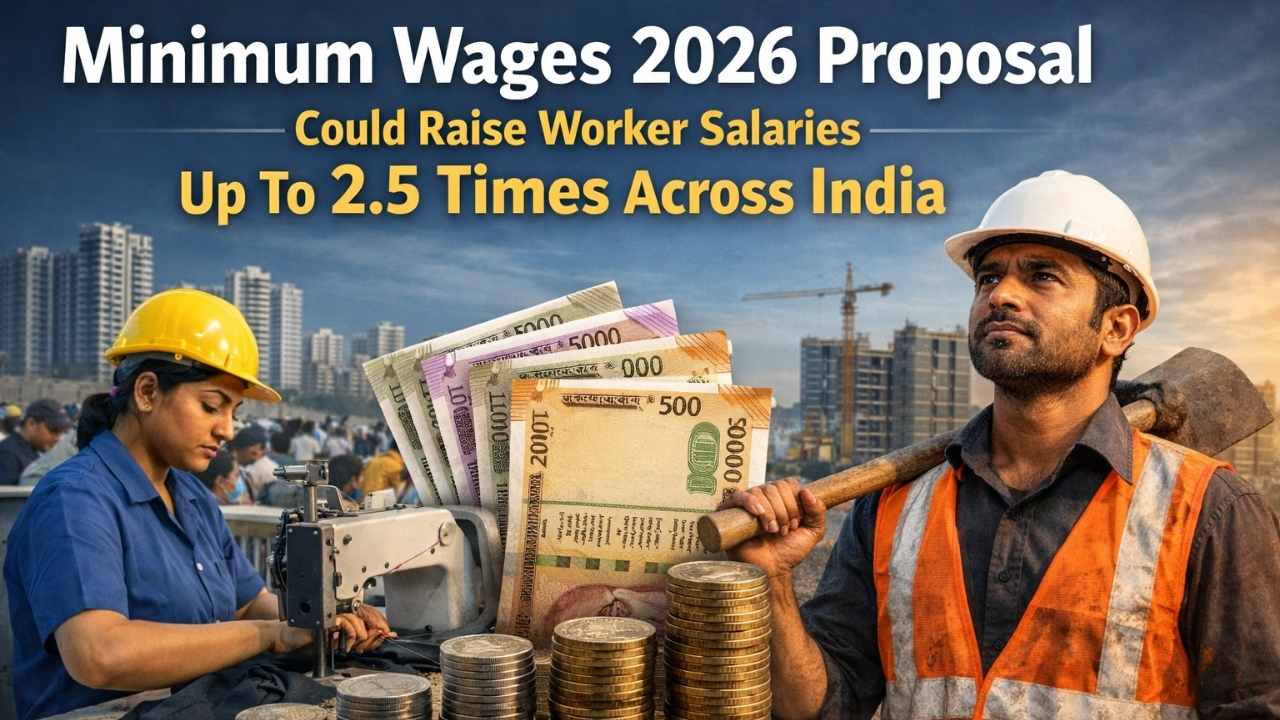
Minimum Wages 2026 Proposal: India’s labour wage structure may see a major shift as discussions around a significant minimum wage revision for 2026 gain attention. Reports suggest a possible move to raise statutory minimum wages up to 2.5 times current levels to support workers facing rising living costs.
The proposed change is expected to benefit millions of workers in low-income and informal sectors. While widely discussed, there is no official nationwide confirmation yet. Still, the idea reflects growing focus on fair pay, economic balance, and improving the standard of living for Indian workers.
Also Read: Important RBI Update 2026: Inactive, Dormant, and Zero Balance Accounts Under Review
Minimum Wages 2026 Government Pay Hike Proposal Explained
The proposal to increase minimum wages by up to 2.5 times has gained attention across various reports and labour discussions. It aims to address rising inflation, higher living expenses, and the need for fair income for low-paid workers.
If implemented, this would be considered one of the biggest wage reforms in recent years. The plan focuses on improving earnings for workers in sectors where wages have remained low for a long time.
Purpose Behind Increasing Minimum Wages Across India
The main goal of this proposed wage hike is to help workers manage everyday expenses more easily. Rising costs of food, housing, healthcare, and education have made it difficult for low-income earners to maintain a stable standard of living.
Also Read: New EPFO Interest Rate Update Signals Minor Reduction in Provident Fund Returns for FY26
Policy discussions also suggest that increasing wages could boost productivity and reduce income inequality. A stronger wage floor may help workers meet basic needs and improve economic stability in both rural and urban areas.
Minimum Wages 2026 Proposal: Overview Table
| Key Information | Details |
|---|---|
| Proposal | Increase in minimum wages up to 2.5 times current levels |
| Expected Year | 2026 |
| Main Aim | Support workers against rising living costs |
| Beneficiaries | Labourers, factory workers, contract and informal sector employees |
| Status | Widely discussed proposal, not officially confirmed nationwide |
| Related Law | Code on Wages, 2019 |
| Possible Impact | Higher earnings and improved living standards |
Expected Impact On Low Income And Informal Sector Workers
If approved, the increase would benefit daily wage labourers, factory workers, construction staff, and contract workers. These groups depend heavily on minimum wage protection for financial stability.
A higher wage floor could improve their ability to afford basic needs and reduce financial stress. It may also bring better job security and more dignity in work conditions.
Also Read: Kalyan Jewellers Share Target Price 2026–2030: Long-Term Investment Potential And Market Outlook
Role Of Code On Wages In Setting Pay Standards
The Code on Wages, 2019 was created to bring uniformity in wage rules across India. It allows the government to set wage standards that apply to different industries and job roles.
This law supports the idea of a national wage floor and aims to ensure that no worker is paid below a certain level. The proposed increase could be introduced under this framework if approved.
Difference Between Minimum Wage Hike And Pay Commission
The proposed minimum wage increase is different from the pay revisions under the Pay Commission. Pay Commission changes mainly affect central government employees.
Also Read: Bank Working Hours Changed From 1 February 2026? Viral Message Truth Every Customer Must Know
Minimum wage changes focus on labourers and private sector workers. These policies aim to improve earnings for people working in factories, farms, construction sites, and other wage-based jobs.
Economic Reasons Behind The Wage Increase Discussion
Rising inflation and higher living costs are key reasons behind the discussion of increasing minimum wages. Workers often struggle to meet daily needs as prices continue to rise over time.
A higher wage floor could increase spending power among workers. This may also help boost local economies as people have more money to spend on goods and services.
Also Read: New BSNL 65-Day Recharge Plan 2026 Brings Unlimited Voice Calling With Long Validity Benefits
Potential Challenges In Implementing Wage Reforms
Introducing a large wage increase can be challenging for small businesses and employers. They may need time to adjust to higher salary payments and manage operational costs.
However, careful planning and gradual implementation could reduce pressure on businesses. Policymakers may consider balanced approaches to protect both workers and employers.
Expected Timeline And Policy Discussion Trends
Some reports suggest that such changes could be considered around 2026 as part of broader labour reforms. Discussions around wage standards have been ongoing for several years.
Also Read: Petrol Diesel Price Drop Today In India: Check Latest Rates And City Wise Updates
Although no official nationwide notification has confirmed the 2.5 times increase, the topic continues to gain attention. Future policy decisions will determine whether the proposal becomes a reality.
Long Term Effects On Workers Living Standards
If the proposed hike becomes official, it could significantly improve the quality of life for millions of workers. Better income can support access to education, healthcare, and proper housing.
Over time, higher wages may reduce poverty levels and improve financial security. This could help create a more balanced and stable economic environment for workers across the country.
Also Read: New Income Tax Act 2026 Explained: How Salaried Employees May Gain ₹25,000 to ₹80,000 Annually