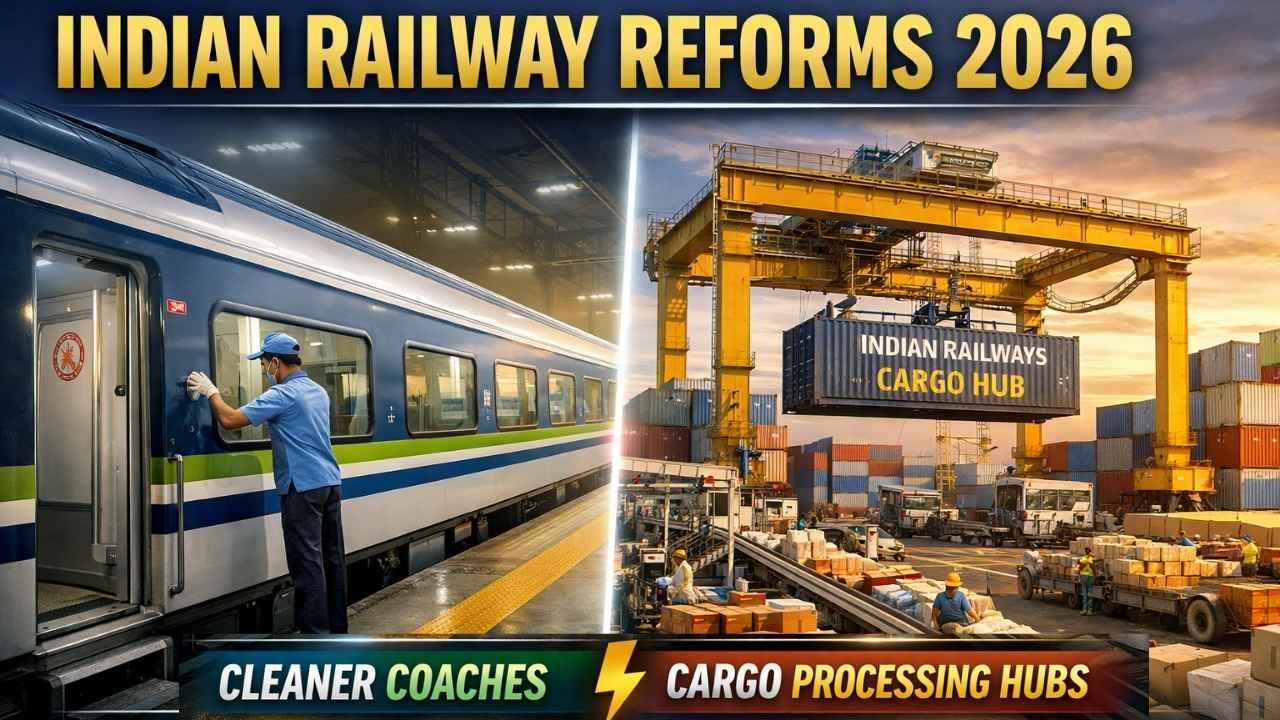
Railway Reforms 2026: India is pushing major railway reforms in 2026 to improve passenger comfort and boost freight efficiency. Cleaner coaches, better hygiene systems, and upgraded onboard services are at the center of this transformation, aiming to provide a more comfortable travel experience for millions of passengers.
At the same time, Indian Railways is strengthening its cargo network by turning freight terminals into processing hubs. These changes are part of a larger modernization effort designed to improve logistics, increase revenue, and support industries through faster and more efficient goods handling.
Also Read: ₹25 Lakh Lump Sum vs ₹25000 SIP: Which Reaches ₹10 Crore Faster Over Time
Focus on Cleaner Coaches Across Long-Distance Trains
Indian Railways has introduced continuous cleaning systems on long-distance trains to maintain better hygiene. Dedicated staff are now deployed onboard to regularly clean toilets, wash basins, and common areas during journeys.
Cleaning operations are planned at regular intervals to ensure that coaches remain fresh and usable throughout the trip. This initiative aims to improve passenger comfort and create a more pleasant travel environment.
Improved Hygiene Services for General and Reserved Coaches
The new reform ensures that both general and reserved coaches receive equal attention in terms of cleanliness. Earlier, general compartments often lacked consistent maintenance, but the new plan aims to change that.
Also Read: Government Backed Post Office FD 2026 Offering Safe Growth From ₹6 Lakh Investment
Garbage collection, toilet upkeep, and linen management are now being handled in a more structured way. This ensures a better experience for passengers traveling in all categories.
Railway Reforms 2026 Overview
| Key Area | Details |
|---|---|
| Reform Initiative | 52 reforms in 52 weeks program |
| Passenger Focus | Cleaner coaches, onboard staff, hygiene upgrades |
| Cleaning Frequency | Regular intervals during journeys |
| Coverage | General and reserved coaches |
| Cargo Expansion | Terminals becoming processing hubs |
| Planned Terminals | More than 500 Gati Shakti cargo terminals |
| Existing Terminals | 124 multimodal terminals being upgraded |
| Expected Benefits | Better comfort, faster logistics, higher revenue |
Transformation of Cargo Terminals into Processing Hubs
Cargo terminals are being developed into multi-use centers where goods can be processed along with loading and unloading. This step is expected to support industries by reducing time spent on handling materials.
These hubs may include storage, packaging, and value-added services. Such development will improve efficiency and strengthen supply chains across different regions.
Also Read: RBI New Credit Rules 2026 Tighten Broker Funding Norms And Reshape Indian Stock Market Landscape
Expansion of Gati Shakti Cargo Terminal Network
Indian Railways plans to expand its cargo network by setting up more than 500 Gati Shakti cargo terminals across the country. This expansion will create stronger connections between industries and transport systems.
Existing multimodal terminals are also being improved to handle increased freight movement. These changes are designed to boost logistics capacity and support economic growth.
Role of Technology in Maintaining Cleanliness Standards
Technology is being used to monitor cleaning quality and ensure timely service inside trains. Digital supervision and tracking systems help staff maintain consistency in cleanliness.
Also Read: School Holiday News Update: Are All Schools And Colleges Closed Till February 25 Nationwide
This system allows quick response to passenger needs during travel. It also helps railway authorities ensure that hygiene standards remain high throughout the journey.
Boost to Passenger Comfort and Travel Experience
Clean toilets, managed garbage systems, and fresh coaches are expected to make travel more comfortable. Passengers can expect a noticeable improvement in overall journey quality.
Regular maintenance during travel reduces unpleasant conditions and supports better health and safety. These changes aim to make train travel more enjoyable for everyone.
Also Read: New Draft Income Tax Rules 2026 Bring Major Changes To HRA And Hostel Allowance Limits
Strengthening Freight Capacity and Revenue Growth
The cargo terminal reforms are expected to improve freight handling capacity across the country. With better infrastructure, more goods can be moved faster and more efficiently.
Railways are aiming to increase revenue through higher freight activity. Processing hubs will attract industries that need fast and reliable transport solutions.
Supporting Industries Through Value-Added Logistics Services
The development of processing hubs allows industries to handle tasks like packaging, storage, and processing at one location. This reduces time and cost for businesses.
Also Read: Best Way For Senior Citizens To Earn ₹20,000 Monthly Through SCSS Investment Plan
Better connectivity between production centers and markets will help improve supply chain efficiency. It also supports small and large industries by providing better access to transport services.
Long-Term Vision of Modernizing Indian Railways
These reforms are part of a larger plan to modernize railway services across India. The focus is on improving both passenger comfort and freight operations through technology and better infrastructure.
Over time, these efforts are expected to create a cleaner, faster, and more efficient railway system. The long-term goal is to make railways a strong backbone for national growth and connectivity.
Also Read: Labour Wages Increase 2026 Announced With Major Salary Hike For Workers Across Indian States