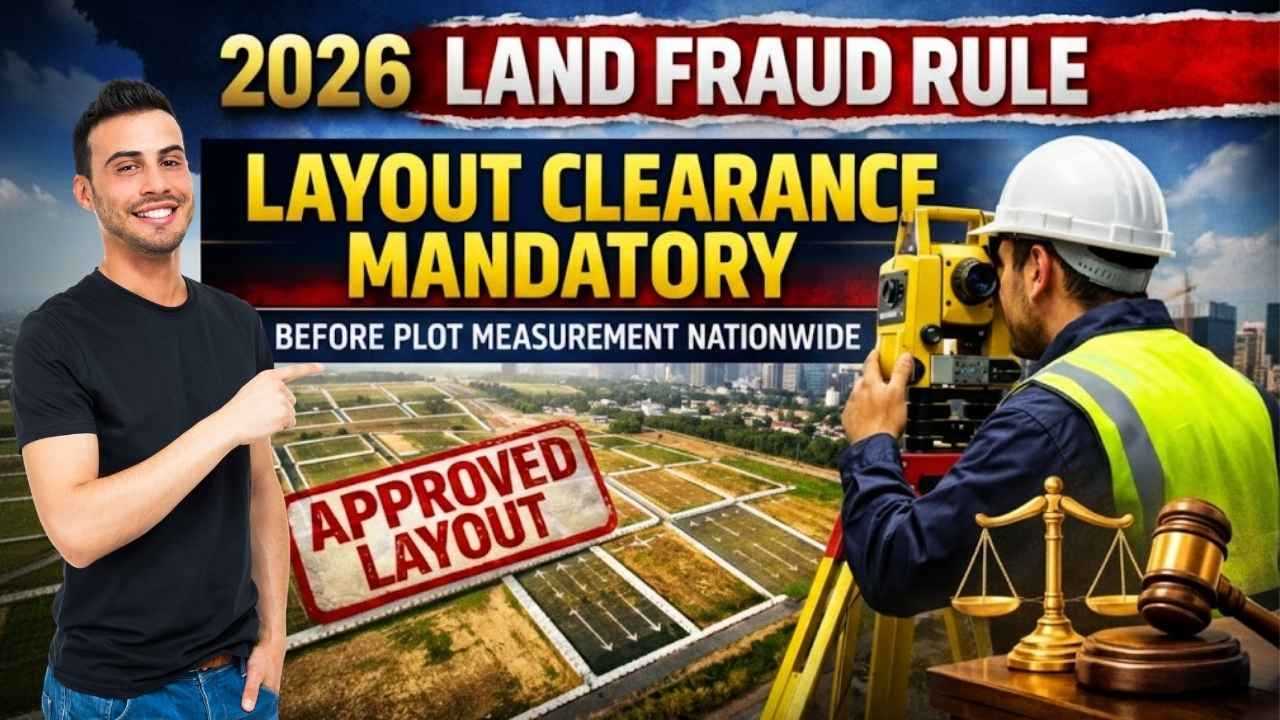
2026 Land Fraud Rule: India is taking new steps to control land fraud and illegal plotting, especially in urban and semi-urban areas. A major rule introduced in Maharashtra now requires layout clearance before any plot measurement begins. This move is aimed at improving transparency and ensuring that plotted developments follow proper planning and legal procedures.
The change reflects a wider trend across India, where authorities are strengthening land verification and approval systems. Several states are working to prevent fake layouts, illegal subdivisions, and property scams. The new rule is seen as an important step toward protecting buyers and bringing more accountability to land development practices.
Also Read: Supreme Court EPS 95 Decision 2026 Reshapes Pension Calculations And Higher Benefit Eligibility
New Rule to Curb Land Fraud in India
The Maharashtra government has introduced a rule that makes layout clearance mandatory before any plot measurement takes place. This applies to areas under municipal corporations, councils, and planning authorities. The goal is to stop illegal plotting and unauthorized land sales that often lead to disputes.
This rule prevents developers from dividing land into plots without first getting approval from the planning department. It helps authorities check land legality, infrastructure planning, and development permissions before measurement begins. This step is expected to reduce fraud and improve urban planning standards.
Layout Clearance Requirement Before Plot Measurement
Layout clearance means a proposed map showing how land will be divided into plots, including roads, drainage, and public spaces. Developers must submit this plan to local authorities and get approval before starting land measurement or subdivision work.
Also Read: Canara Bank 310 Day FD Interest Rates, Benefits, and Safe Investment Guide For 2026
Earlier, some developers measured land and sold plots without approval, which created legal problems for buyers. Now, without layout clearance, measurement for plotting cannot take place. This ensures that only approved and planned developments move forward.
2026 Land Fraud Rule: Overview Table
| Aspect | Details |
|---|---|
| Main Rule | Layout clearance required before plot measurement |
| State Where Introduced | Maharashtra |
| Purpose | Prevent land fraud and illegal plotting |
| Who Must Comply | Developers, landowners, and plot sellers |
| Areas Covered | Municipal and planning authority regions |
| Buyer Benefit | Ensures legal and approved plots |
| Previous Issue | Unapproved layouts and fake subdivisions |
| Wider Trend | Similar anti-fraud actions in other Indian states |
| Expected Impact | Better planning and reduced property disputes |
Purpose Behind the Government’s Anti Fraud Land Policy
The main reason behind this rule is to prevent illegal land plotting and protect buyers from scams. Many people have lost money by purchasing plots that were not legally approved or could not be registered later. The new requirement helps stop such situations early.
Authorities want to ensure that land development follows proper legal steps. By checking layout plans before measurement, they can verify ownership, land use permissions, and infrastructure planning. This reduces the chances of disputes and protects the interests of genuine buyers.
Also Read: Post Office FD Scheme 2026: Deposit ₹1 Lakh And Earn Safe Annual Interest Returns
Impact on Real Estate Developers and Plot Sellers
Developers and landowners must now follow a stricter process before selling plots. They need to get layout plans approved before dividing land or conducting measurements. This ensures that the development meets planning standards and legal conditions.
While this may slow down the process initially, it creates a more transparent system. Honest developers benefit because buyers feel safer investing in approved projects. It also helps reduce competition from illegal and unauthorized plotting activities.
Benefits of the Rule for Property Buyers
Buyers often face problems when they purchase plots in unapproved layouts. They may later find out that the land has no road access, no basic infrastructure, or cannot be legally registered. The new rule helps avoid such risks.
Also Read: 2026 Central Pay Commission Update Shows 34% Salary Hike and Major Pension Boost Decision
With layout clearance required, buyers can feel more confident that the plot is part of an approved plan. It ensures proper roads, drainage, and development permissions. This improves trust in the real estate market and protects long-term investments.
Common Land Fraud Practices the Rule Aims to Stop
In many places, fraud happens when land is divided and sold without proper approval. Some sellers create fake layouts or sell agricultural land as residential plots. Buyers may not realize the problem until it is too late.
The new rule targets these practices by requiring approval before any land measurement. Authorities can verify documents and ensure legal use of land before plotting begins. This reduces chances of fake subdivisions and illegal sales.
Also Read: Driving Licence New Rules 2026: Key Changes, Penalties, Digital Services, and Driver Impact
Wider Trend of Land Record Reforms Across India
Although this rule started in Maharashtra, other states are also taking steps to prevent land fraud. Governments are working on better verification systems, improved registry processes, and stricter checks before property transactions.
States like Uttar Pradesh and Bihar are also focusing on checking fake land records and illegal mutations. These actions show a growing national effort to make property transactions safer and more transparent for citizens.
Possible Nationwide Implementation of Layout Approval System
The success of this rule may encourage other states to adopt similar policies. As land fraud is a common problem across India, requiring layout approval before measurement could become a standard practice nationwide.
If implemented widely, this system would create uniform rules for plotted development. It would help ensure that all land subdivisions follow planning guidelines and legal procedures, improving confidence in the property market.
Important Checks Buyers Should Make Before Purchasing Plots
Even with new rules, buyers should still verify important details before purchasing land. Checking layout approval documents, land conversion status, and ownership records can prevent future legal problems.
Buyers should also confirm that the plot is part of an approved development plan with proper access and infrastructure. Taking these precautions helps ensure a safe and secure investment in land or property.
Also Read: Tenant Rights 2026 Explained: New Legal Protections Every Renter Must Know About Today